 Damon Chen
What to take from this
- 1
Chen bought Docsium rather than building the original add-on. He says he cut its monthly price from $19.99 to $10; ARR initially fell by roughly half before it began to recover.47
- 2
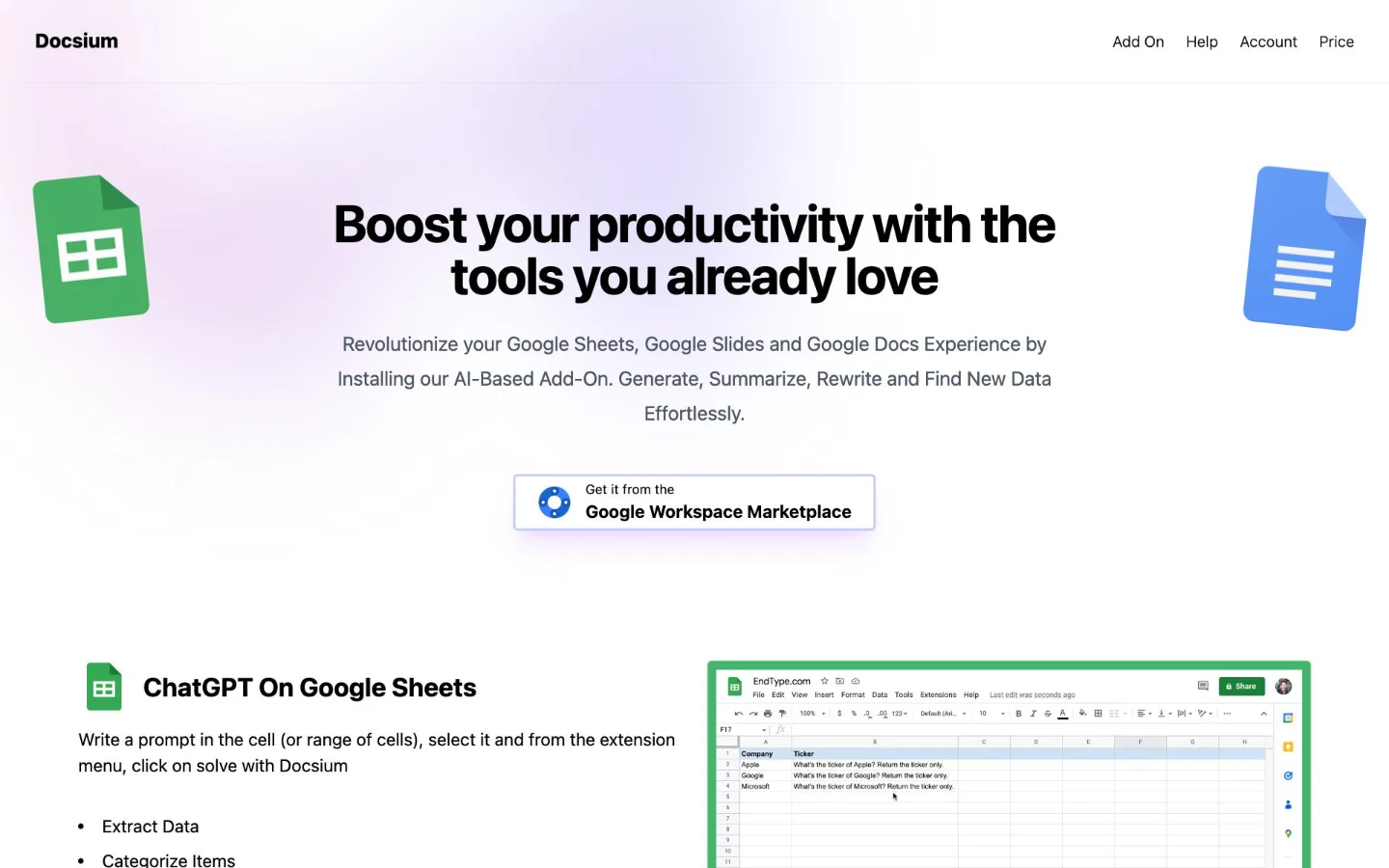
A credit follows the work. Running the add-on across 100 spreadsheet cells uses 100 credits; six runs in a Google Doc use six. Paid tiers have the same features.44,46
- 3
The founder reported $833 MRR in July 2024 and credited Google Workspace Marketplace for growth. The public listing demonstrates distribution, not the number of paying accounts behind that figure.45,48
Snapshot
Docsium charges for repeating a small operation inside software the buyer already uses. A spreadsheet owner cleaning a list can select a range, give the add-on instructions and get results in the sheet. A colleague writing a document can run it on selected text instead. Neither needs a new document repository or a separate chat interface. The paid decision comes when the free credits run low and there is still work left to do.44,46,49
This small acquisition is an unusually useful counterexample to advice to raise prices. Chen said he cut the price of an existing product, took an immediate hit to its annual run rate and later saw it recover. He subsequently attached a dollar amount to both the purchase and the monthly recurring revenue. Those disclosures describe the buyer's experiment with this one add-on. They do not tell us how much of the recovery came from price rather than from the store that distributed it.47,48
Member report
Keep reading with membership
8 more sections in this report, about 4 minutes of reading.
- Customer and problem
- Offer and pricing
- How it gets customers
- Costs and margin conditions
- Revenue evidence and trajectory
- Risks
- What transfers and what does not
- Unknowns
$9/month or $69/year. Every full report and every founder synthesis.