 Yihui
What to take from this
- 1
Choose a Skill by what you need to hand over. Field Notes Deck lets a trainer check which parts a client can still edit in PowerPoint.7
- 2
One job can justify buying one workflow. A Pro subscription has to earn its place on the buyer's next project as well.6,7,8
- 3
Skillry's subscription run rate and its cash receipts answer different questions. On November 19, 2026, TrustMRR showed $6,032 in monthly recurring revenue (MRR) and $11,950 in revenue over the preceding 30 days.2
Snapshot
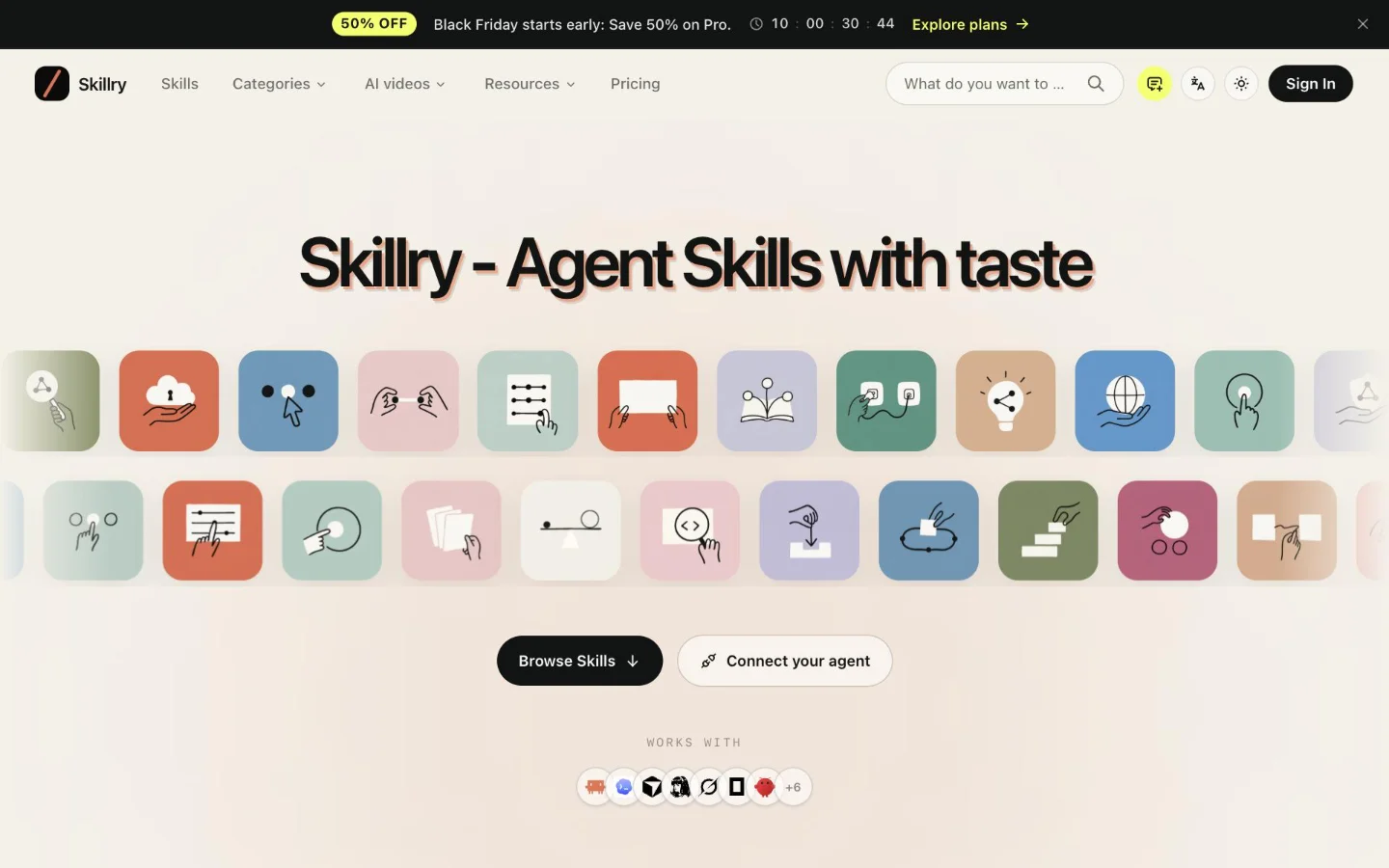
Skillry sells a way to make a specific deliverable with a coding agent the customer already uses. A buyer can look at a finished deck, check the export against a client's requirements, then install the instructions behind the example. That sequence matters for someone with a workshop to deliver: the decision is whether this particular workflow will produce a file they can hand over.6,7,9
The same catalogue serves a buyer who wants just that Skill and one who expects to make regular use of the library. Alongside individual purchases, Skillry offers subscriptions and lifetime access. Its Stripe-linked product page counted 475 active subscriptions at the November snapshot.2,6,7
Customer and problem
For a trainer preparing an outdoor-learning presentation, editability can decide the purchase. Asking an agent for slides takes little effort; replacing generic images and matching the look across pages can take considerably more. Field Notes Deck specifies that text and notes remain editable in PowerPoint, while decorative elements and backgrounds arrive as pictures. That trade can work for a trainer delivering a workshop. It rules the deck out for an agency that has promised an entirely shape-editable master. A gallery alone would leave both buyers guessing.7
The free Narrated Report Deck serves an author who wants a presentation people can listen to. Its offer includes a script for each page and the option to add speech through a named external voice provider. That last step is useful to one author and a reason to pass for another whose material cannot be shared with the provider.8,9
Offer and pricing
Skillry discounts the first subscription term and offers an alternative for buyers who want to pay once. On the official November 19 pricing page, the Black Friday offer was $9.99 for the first month, then $19.90 per month, or $79 for the first year, then $158 per year. The stated deadline for those subscription offers was November 30 at 11:59 p.m. Pacific time. Founding Lifetime was $169 once, against a displayed $249 comparison price; Field Notes Deck alone was $4.99.6,7,29
The $399 annual Business license buys different rights. A designer on a personal plan can deliver finished client work; a software company needs the Business license to offer the underlying workflow to customers on a hosted platform. That license also includes the right to use official showcase media. The daily personal allowance counts distinct downloads, regardless of how many videos or slides the customer renders.6,29
How it gets customers
Yihui's free Opus video repository gives visitors a route to Skillry at the moment they want to reproduce an effect. The repository credits the original creators, includes prompts where available and links to side-by-side remakes. One Skillry link carries a GitHub campaign tag. The page displayed about 15.9k GitHub stars on November 19, versus about 15.7k in the November 17–18 research notes. The related Fable gallery also points to Skillry and attributes the choice of model to the original creators rather than claiming the curator verified it.5,11,27
On October 7 Yihui said Marc Lou's TrustMRR mention drew developers but yielded little paid conversion; he credited other social channels, search and affiliates for purchases (translated from Chinese).12 The affiliate terms explain the incentive: a promoter earns 40% of qualifying referred payments in the first twelve months after the customer's first purchase.10
Costs and margin conditions
The customer covers any external generation costs, while Skillry maintains the workflows. Skills run on the customer's own system, so even a free install can result in a bill from a model, API or rendering provider. Skillry still has to build examples, test them as agents change, document requirements and help buyers who expected a different result. Its terms explicitly decline to guarantee compatibility with every agent or future version.6,8,9,29
A download can be cheap to deliver and still carry obligations. An eligible referral leaves part of the payment with the promoter. A lifetime buyer pays once and receives future catalogue updates. Someone who buys a single Skill owes nothing toward the next release.6,7,10
Revenue evidence and trajectory
Skillry's MRR and active subscription count rose between the recorded snapshots. The first two rows are earlier editorial readings of the same listing. We rechecked the product detail directly on November 19 and left the missing historical value unfilled.2
| Snapshot (2026) | MRR | Active subscriptions | All-time revenue |
|---|---|---|---|
| November 10 | $5,136 | 449 | $18,141 |
| November 17–18 (exact day not retained) | about $5,960 | 474 | Not recorded |
| November 19 | $6,032 | 475 | $20,840 |
We use the product detail for the current figure because the founder card rounds Skillry's MRR to $6k. The listing reports $11,950 in trailing-30-day receipts and $20,840 collected over its history. Upfront annual or lifetime payments could explain why receipts for the recent period exceeded MRR. The move from 474 to 475 active subscriptions is a net change between readings; more than one combination of sales and cancellations could produce it.1,2,6
Risks
The easiest buyer to reach may only need one deck. The $4.99 option competes with Pro for that buyer's money, and a free workflow may be enough. A single sale can still be better than losing the buyer. The risk for Pro is what happens after the deck ships. A product-page download counter measures activity, the pricing page claims over a thousand supporters, and TrustMRR counts 475 active subscriptions. None measures how often a buyer comes back with a second job.2,6,7,8
What transfers and what does not
A small team can copy Skillry's test before purchase with one workflow. Show a real deliverable, its inputs, the parts a client can edit and the costs the sticker price excludes. Let buyers compare a single purchase with access to the library for the work they actually have. Copying the buttons won't bring Yihui's gallery audience or qualifying referrals. Our test for building out a library would be to watch for buyers who return for a different workflow, rather than visitors who replay the first demo.6,7,10,11
Unknowns
Skillry's margin and renewal economics remain unknown. The public figures do not break sales into monthly, annual, lifetime, individual or Business purchases. They do not disclose renewals after the introductory price, refunds, maintenance hours or costs, the number of qualifying referral payments or what affiliates actually received.2,6,10,29
The channel account is Yihui's interpretation of his tracking; we have no order export, and repository stars measure neither installs nor sales. Subscription records do not identify unique buyers, and an English catalogue with USD prices cannot locate them. The deck examples describe the published offers; we did not test either workflow in production.2,6,7,8,9,11,12