 Damon Chen
What to take from this
- 1
Basharath built QuickyAI and announced selling it to Chen. Chen says he then hired the creator after working alongside him on the transfer. Calling Chen the original maker loses the most interesting part of the deal.41,42
- 2
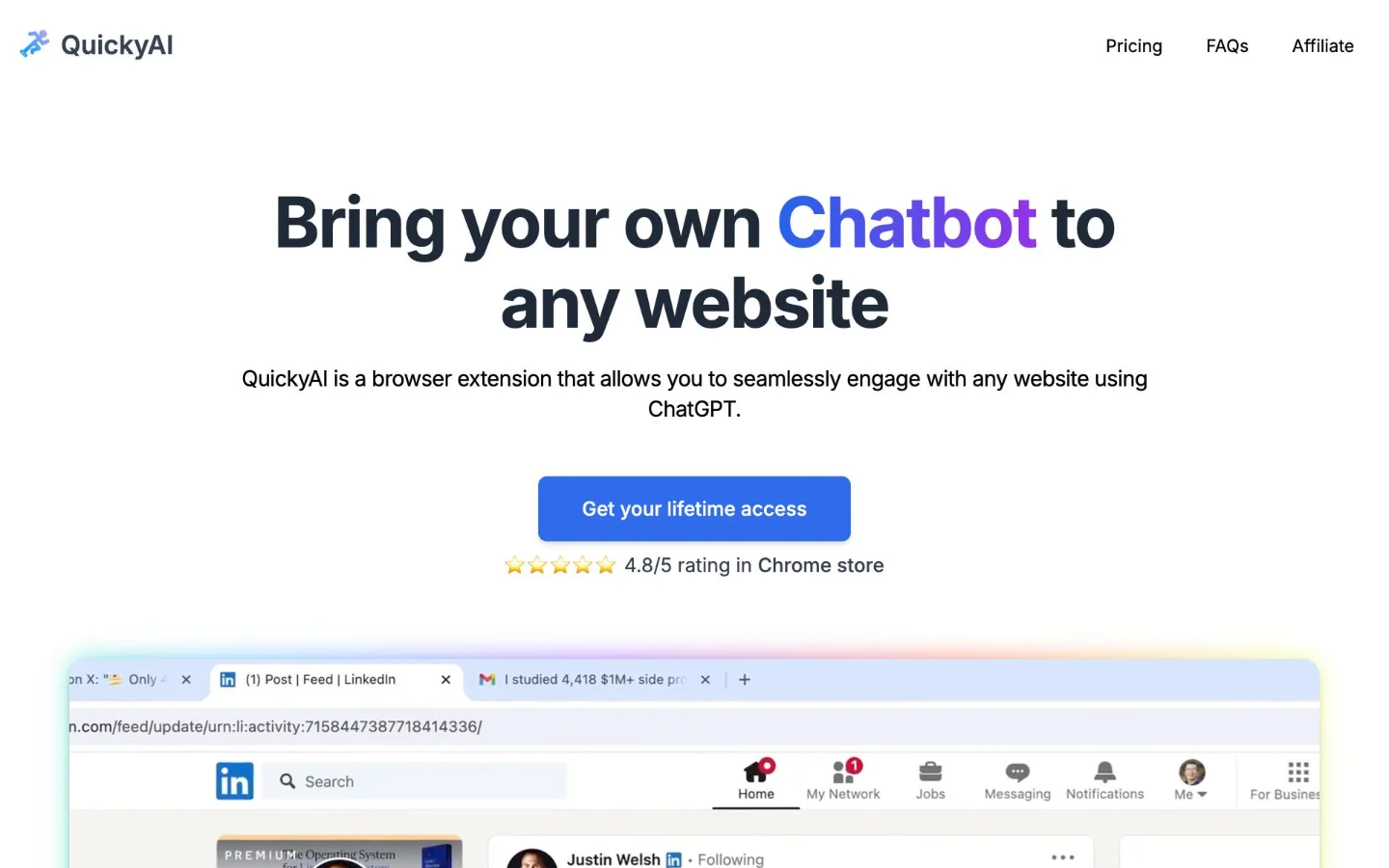
The license and the model usage are separate purchases. The site offers lifetime activation for the extension; buyers provide their own OpenAI access and pay their own usage charges.40
- 3
The $1.4K in Chen's account was two months of sales cited in Basharath's pitch. It was neither a purchase price nor monthly recurring revenue under the new owner.41
Snapshot
QuickyAI gives a buyer a reason to pay once even if they already have access to a capable AI model. The buyer may spend their day reading pages in a browser and repeatedly opening another tab, copying a passage and reconstructing the question. The extension puts commands on the page: select text, issue a saved instruction, summarize the page or ask about a captured image. The buyer pays for this change in workflow and separately covers the model calls it produces.40,43
Chen's acquisition announcement supplies an unusually clear distinction between what was bought and who made it. Basharath brought a working product, a store listing and a revenue claim; Chen brought an existing group of software products to run. During the transfer Chen decided he also wanted the person who had built the extension on his team. The two principals agree on the direction of the sale. Neither discloses a consideration figure for it.41,42
Member report
Keep reading with membership
8 more sections in this report, about 4 minutes of reading.
- Customer and problem
- Offer and pricing
- How it gets customers
- Costs and margin conditions
- Revenue evidence and trajectory
- Risks
- What transfers and what does not
- Unknowns
$9/month or $69/year. Every full report and every founder synthesis.